
Overview
Migraines are an intense type of headache often causing moderate-severe pain.
The pain is usually on one side of the head around the temple.
Throbbing sensations are also very common.
Other symptoms include:
- Feeling or being sick (nausea or vomiting)
- “Aura”*
Symptoms that may occur during or just before a migraine include:
- Stiff neck
- Going to toilet more often
- Heavy fatigue
- Mood changes
- Changes in eating or drinking habits
*Migraine Aura
Aura refers to a group of symptoms accompanying a migraine.
These symptoms occur in about a quarter of those who experience migraines and include:
- Visual disturbances such as seeing zigzag lines or flashing lights
- Speech difficulties
- Dizziness
- Numbness or “pins and needles” sensation
How long does a migraine last?
Usually between 2 hours and 3 days
Speak to a doctor if:
- First time experiencing migraine systems (to get proper diagnosis)
- Migraines are around time of period
- Migraines getting worse (more painful, lasting longer)
- More often than once a week
- Unable to cope with migraines
Seek an urgent doctors appointment if:
- Migraine lasts longer than 3 days
- Aura for longer than an hour continuously
- Recently or currently pregnant
Go to the hospital or call the emergency services if:
- Extremely painful headache (“worst headache of my life”)
- Problems with speech or memory, or confusion
- Seizure or fit
- High temperature (fever) and/or other meningitis symptoms such as rash that does not fade when glass is pressed on it
- Severe vision changes – blurry or double vision or loss of vision.
- Weakness or immobility of one side of the body (possible stroke)
TREATMENT FOR MIGRAINE
First-line treatment would be over-the-counter painkillers such as Ibuprofen and/or Paracetamol.
If that is ineffective, then a stronger migraine-specific painkiller such as Sumatriptan can be used. This can also be purchased over the counter if one has already been diagnosed by a doctor with migraine (see a doctor if it is the first time experiencing migraine symptoms to confirm diagnosis). It comes as a spray (10mg and 20mg) and as a tablet (50mg and 100mg).
If symptoms still persist or worsen despite taking Sumatriptan, then one should speak to a doctor for further advice. They may prescribe medicines primarily used for other purposes such as sickness or blood pressure but these may help a lot with migraine symptoms.
MIGRALEVE
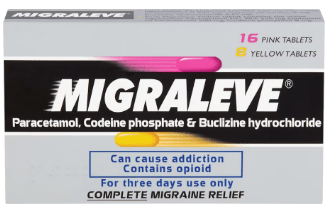
Other OTC remedies that can help with migraine symptoms include Migraleve which comes in various forms.
Migraleve (12+) comes in pink and yellow tablets.
Pink tablet = main tablet – paracetamol, codeine and buclizine (sickness relief). Full treatment of migraine and can even stop an attack from developing if taken timely.
Yellow tablet = after tablet – paracetamol and codeine (no buclizine). For use when migraine symptoms persist after taking a pink tablet.
MIGRAINE DIARY
To keep track of what makes it better or worse.
Common triggers include:
- Mood disorders; anxiety and depression or prolonged stress
- Tiredness
- Dehydration
- Too much alcohol
- Too much caffeine
- Not enough exercise
- Not enough sleep
- Missing meals or poor diet
- Being overweight
Being in a dark room can help during a migraine, especially if there is light sensitivity
SOURCES:
 Shobz Pharmacy