
Use Son’s if Regaine is not available
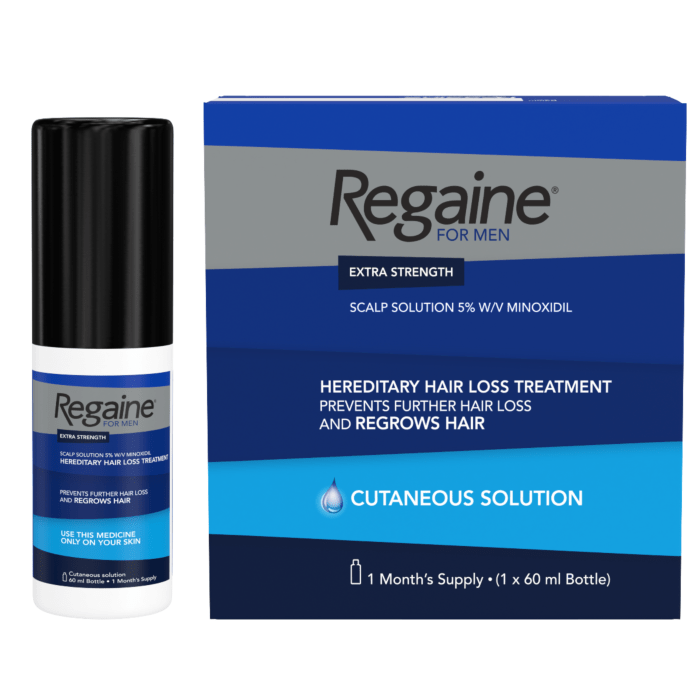

MARKETING POINTS
✔ Males 18-65 (Foam 18-49)
✔ Visible regrowth as quick as 2 months
✔ Results for over 8/10 men
MORE INFORMATION – REGAINE FOR MEN (5%)
MORE INFORMATION – REGAINE FOR WOMEN (REGULAR STRENGTH 2%)
Regaine 5% is not recommended for women due to the risk of side effects such as facial hair growth.
OPTIONS FOR FEMALE HAIR LOSS
Minoxidil 2%
Minoxidil 5%
AVOID IN PREGNANT AND BREASTFEEDING WOMEN
About Minoxidil (Regaine)
- What is Minoxodil?
- In it’s original form (tablet), it is used to treat high blood pressure resistant to other medications. It helps to open up blood vessels.
- When used for the scalp as a foam or solution, it helps to treat hair loss.
- How does it work?
- Regrows hair and stops further hair loss.
- It also helps to re-thicken thinning hair.
- Opens up blood vessels to increase blood flow to scalp
- To revitalise and regrow hair follicles that were shrunk by Dihydrotestosterone (DHT)
- Regrowing hair follicles eventually allow the lost hair to grow back
- How effective is Minoxodil?
- Over 84% effective [4], Over 8/10 men see benefit (either stopping further hair loss or regrowing lost hair)
- Who is Minoxodil most effective for?
- Those who have recently started losing their hair; younger
- Those who only have a small balding area or who have only lost a small amount of hair
- It is unlikely to help in those who have been bald for years or have lost a large amount of hair.
Long term treatment – normally around 3 months for visible difference and 12 months for significant difference. But results can be seen as quickly as 8 weeks in some patients.
IMPORTANT NOTE: May experience a temporary brief increase in hair loss between week 2 and 6 of treatment. This is normal.
Who can and cannot take Regaine
Do not take Regaine if:
- Have kidney tumour
- Under 18
- Over 65
- Have high blood pressure
- Completely bald
- Poor scalp condition; eg: broken skin due to psoriasis or eczema
- Unsure if hair loss was hereditary
- Drug-induced hair loss or hair loss from other non-genetic causes
- If have a bandage or dressing on scalp
Other warnings and precautions:
- Avoid contact with:
- Skin if: broken, inflamed, infected or shaved
- Eyes
- Mouth
- Nose
- Ears
- Do not inhale
- May cause dizziness and low blood pressure. Do not drive or do skilled tasks if this happens.
- Is flammable. Store below 25° C
- Be careful to ensure that the product does not come into contact with a child; including avoiding touching areas where you’ve applied Regaine. This could cause accidental hair growth or heart-related side-effects if swallowed.
- If applied to a part of body other than scalp, wash that area thoroughly to avoid unwanted hair growth.
How to use Regaine
Apply 1mL twice a day:
- Leave 12 hours+ between doses
- Wash hands THOROUGHLY before and after
Do NOT use more than twice a day; it will NOT make the treatment work faster and only increases risk of side effects
Side-effects of Regaine
Very common (more than 1 in 10)
- Headache
Common (up to 1 in 10)
- Itching or angry skin
- Unwanted hair growth outside the scalp (including facial hair for women)
Rare but serious; stop using Regaine and speak to doctor if:
- Low blood pressure
- Dizziness/feeling faint
- Feeling heart beat in chest (palpitations)
- Faster heartbeat resting
- Swollen hands or feet
- Short of breath
- Sudden unexpected weight gain.
- Change in hair colour
Rare but serious side-effects. Seek immediate help:
- Chest pain
- Serious allergic reaction – rash, redness, swelling, breathing difficulties, wheezing
Other side effects of unknown frequency:
- Feeling down
- Eye irriration
- Vomiting
Regaine with other medications
- Finasteride – combination treatment increases efficacy up to 94% as opposed to Minoxodil alone which is around 84% [4]
- Avoid with other scalp treating medications such as psoriasis creams (eg: dithranol) and antifungal medications (eg: ketoconazole)
- Caution with a specific class of blood pressure medication called vasodilators (eg: hydralazine). Minoxodil may increase their effect, increasing side effect risks.
Lifestyle advice and changes for management of hair loss
- Stress management – stress can accelerate and even induce hair loss
- Enough protein. Hair is made mainly from a protein called keratin. Insufficient protein can cause trouble regrowing hair and can accelerate hair loss.
- Hair care
- Scalp massage (gentle) – can help stimulate blood flow to scalp possibly helping to regrow hair
- Avoid sulfur-containing hair products
- Don’t pull on hair too hard. This can cause hair loss (known as traction alopecia, reversible in mild cases, permanent in severe cases).
- Limit alcohol and smoking – these can contribute to hair loss.
- Diet/nutrition; important vitamins/minerals for hair health:
- Iron
- Zinc
- Vitamin D
- Biotin
- Omega fatty acids.
- Avoid extreme diets. Hair deprived of nutrients can contribute to hair loss.
Regaine Ingredients:
Propylene glycol – may cause irritation in some
Ethanol
Water
FAQ:
- Does Minoxodil work for beard growth?
- How would I know if the treatment is ineffective?
- If no regrowth after 1 year (for solution; 16 weeks for foam), stop using the product and try other methods such as Finasteride
- What happens if I stop taking Minoxodil?
- You’ll lose the hair it managed to regrow and go back to your normal balding pattern.
- Does Regaine fix a receding hairline?
- Yes. It can regenerate the lost hair around the hairline to get it back.
SOURCES:
[1] https://bnf.nice.org.uk/drugs/minoxidil/#indications-and-dose
[2] https://www.medicines.org.uk/emc/product/5781/smpc#gref
[3]https://www.medicines.org.uk/emc/product/102/smpc#gref
[4]
[5] https://www.regaine.co.uk/mens-frequently-asked-hair-loss-questions
 Shobz Pharmacy