
WHAT IS IMPETIGO?
Impetigo is a common bacterial skin infection.
Very contagious but not usually serious.
Located most commonly around the mouth and face but can be in other areas.
It can occur as a secondary infection to other illnesses such as chickenpox, especially if there was a lot of scratching of the spots, they can get infected.
CAUSES OF IMPETIGO:
Impetigo tends to infect skin already damaged. Eg: wound from injury, insect bite, chickenpox, eczema.
TWO MAIN TYPES OF IMPETIGO:
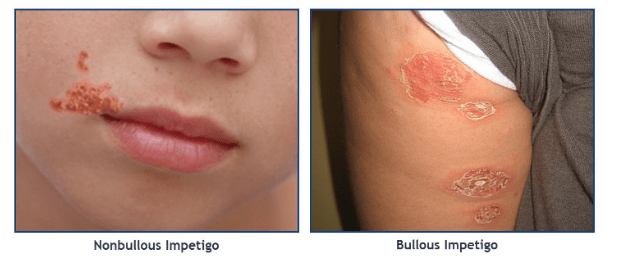
Non-bullous (most common)
- Itchy, small, red inflamed patches of skin (sores and blisters)
- The sores and blisters can burst leaving a gold-crusted looking plaque
- May or may not be itchy
Bullous (less common but generally more serious)
Bullous impetigo occurs when yellow liquid is released from burst blisters. The yellow liquid hardens leaving a crater around a scab.
- Extensive blistering and fluid
- Larger spots or patches
- Whole body symptoms likelier such as fever, diarrhea, pain and weakness
- Most common in armpits, neck folds and nappy area
- May involve swollen lymph nodes
A small amount of bleeding may occur especially during treatment when crusts are coming off. This is normal. See a doctor if bleeding is extensive or bothersome.
HOW LONG DOES IMPETIGO LAST?
- With treatment – usually within less than a week. Treatment speeds up healing process and minimises infection risk.
- Without treatment – usually gets better by itself within 2-3 weeks
SEE GP if:
- First time these symptoms
- Secondary infection (eg: from chickenpox)
- Whole-body symptoms such as fever, shaking, general weakness. Likely to be bullous impetigo (more likely to be serious)
- Breastfeeding and impetigo is located there.
COMPLICATIONS OF IMPETIGO
- Are uncommon but include:
Cellulitis – a deeper bacterial skin infection - Ulceration of the deeper layers of the skin, which if infected in the worst case scenario can lead to tissue death (gangrene).
TREATMENT
Localised, non-bullous impetigo:
- Hydrogen peroxide 1% cream – risk of irritation do not use on sensitive skin
- Fusidic acid cream – antibiotic cream
If widespread or bullous:
- Flucloxacillin – a penicillin antibiotic mainly for skin infections
Those with a weakened immune system or at high risk of complications should take an oral antibiotic to minimise chance of worsening.
Complete the full course even if infection clears up before.
GENERAL ADVICE:
- Children should be off school until it is fully cleared
- Avoid people contact, especially those who are vulnerable (eg: diabetes, cancer patients, elderly) for at least 48 hours after treatment has started or until all the blisters have crusted and dried out.
- Short nails
- Don’t share towels
- Can remove crusted areas by washing with soapy water as long as no discomfort
- Wash at high temperature to kill bacteria
SOURCES AND IMAGES:
[1] https://smartypance.com/lessons/dermatology-infectious-diseases/bacterial-infections/
 Shobz Pharmacy